
Palm/Passion Sunday, April 2, services at 8am (in person only) and 10:30am (in-person and on Zoom)

On this first day of Holy Week, two major events happened. First, the children led Jesus into the temple court and the crowds cry, “Hosanna.” They thought he would make a good king, since he had done some many acts of healing and power. But Jesus wasn’t that kind of king. He rode in on a donkey instead of a stallion. The disappointment of the crowd and the jealousy of the religious elite lead to the second event, the Passion. This second half of the liturgy rehearses the scope of the rest of Holy Week–the betrayal, rejection, torture, crucifixion and death of Jesus. Come to the rest of the Holy Week to hear to whole story–which always means Easter is coming.
Maundy Thursday, April 6, service at 7pm (in person only).

The last three days of Holy Week are called the “Triduum” and it rehearses the major drama of Holy Week. By Thursday, the hatred of those who felt threatened by Jesus’ influence had grown murderous. Among his own circle, there was Judas Iscariot who intended to betray Jesus. Jesus knew all of this and his heart had grown heavy. At a last supper, we have two events that happened. In the synoptic gospels (Mt, Mk, Lk), Jesus instituted the eucharist and a new covenant. In John’s Gospel, Jesus washed the disciples feet and gave them a new commandment, “Love one another as I have loved you.” It is this new commandment (mandatum novum) that gives the name of Maundy Thursday. In our liturgy this year, we will have Holy Eucharist followed by the stripping of the altar, as a symbol of Christ’s self-emptying love.
Good Friday, April 7, services at 12:15pm (in person) and 7pm (Zoom)
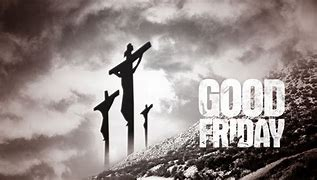
Good Friday is God’s Friday. Jesus was tried the night before by the Sanhedrin and convicted of blasphemy. On behalf of the Empire of Rome, Pontius Pilate gave Jesus the sentence of death by crucifixion for treason, for claiming to be king. As Jesus carried his crossbeam for the cross out to the mountain of the crucified, the people on the way cried and lamented for him. Some sneered at him, telling him to save himself. But, Jesus came not to avert suffering, but to throw his lot in with all of humanity who suffer–so that all would know that God is never absent, not even when we feel most bereft. It is God’s Friday.
Easter Sunday, April 9, at 10:30am (in person and on Zoom)
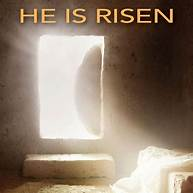
When life is at its worst, it is easy to draw the conclusion that life is pointless and love inevitably disappoints. When Jesus rises from the dead, he does not mean for us to to return to this point of view. Resurrection life is not the old life resuscitated. It is a whole other kind of life available to those who choose to leave what is dead behind and take up a life without the old rules and our desire for control. Grace is for Easter. And all who yield to grace, know the meaning of what it means to rise. Anastatis is the Greek word for risen and it literally means to stand again. Jesus rose so that all might rise, stand again, and stand anew.